
Hot plate welder is the unsung heroes behind many everyday products, from the dashboards in our cars to the sterile containers in hospitals. These machines harness a simple yet effective technique—combining heat and pressure—to fuse plastic parts into bonds that endure tough conditions. Think about the fuel tank in your vehicle or the packaging that keeps your groceries fresh; hot plate welders make these reliable connections possible.
So, what is hot plate welder, and why do they matter so much? This comprehensive guide dives deep into their mechanics, benefits, and applications, offering insights for industry professionals and curious readers alike. We’ll also spotlight how innovators like Suzhou Jfortune Precision Machinery Co., Ltd are pushing the boundaries with cutting-edge solutions for sectors like automotive and medical manufacturing. Let’s explore the world of hot plate welding step by step.
Section 1: What is a Hot Plate Welder?
Defining the Technology
A hot plate welder is a specialized machine that bonds thermoplastic parts by melting their surfaces with a heated plate and then pressing them together to create a robust, lasting joint. This process, known as hot plate welding, shines in industries where precision and durability are non-negotiable, such as automotive assembly and medical device production. It’s a go-to method when you need a seal that won’t budge.
Why Are Hot Plate Welders Important?
The magic of hot plate welder lies in their ability to produce hermetic seals—completely airtight and watertight bonds. This is a game-changer for applications like fuel tanks, where leaks could spell disaster, or medical containers that must stay contamination-free. John Smith, a welding technology expert at Plastics Today, notes, “Hot plate welding is one of the most reliable methods for joining large or complex plastic parts, offering unmatched strength and consistency.” This reliability is why manufacturers trust it for critical components.
How Do They Differ from Other Welders?
Compared to alternatives like ultrasonic or laser welding, hot plate welder stands out for their versatility with larger parts and irregular shapes. While ultrasonic welding excels with small, precise joints, it struggles with bigger components. Hot plate welding, however, thrives in these scenarios and works with a broad spectrum of thermoplastics. Companies like Suzhou Jfortune enhance this flexibility with advanced hot plate welder tailored to specific production demands, making them a top choice across industries.

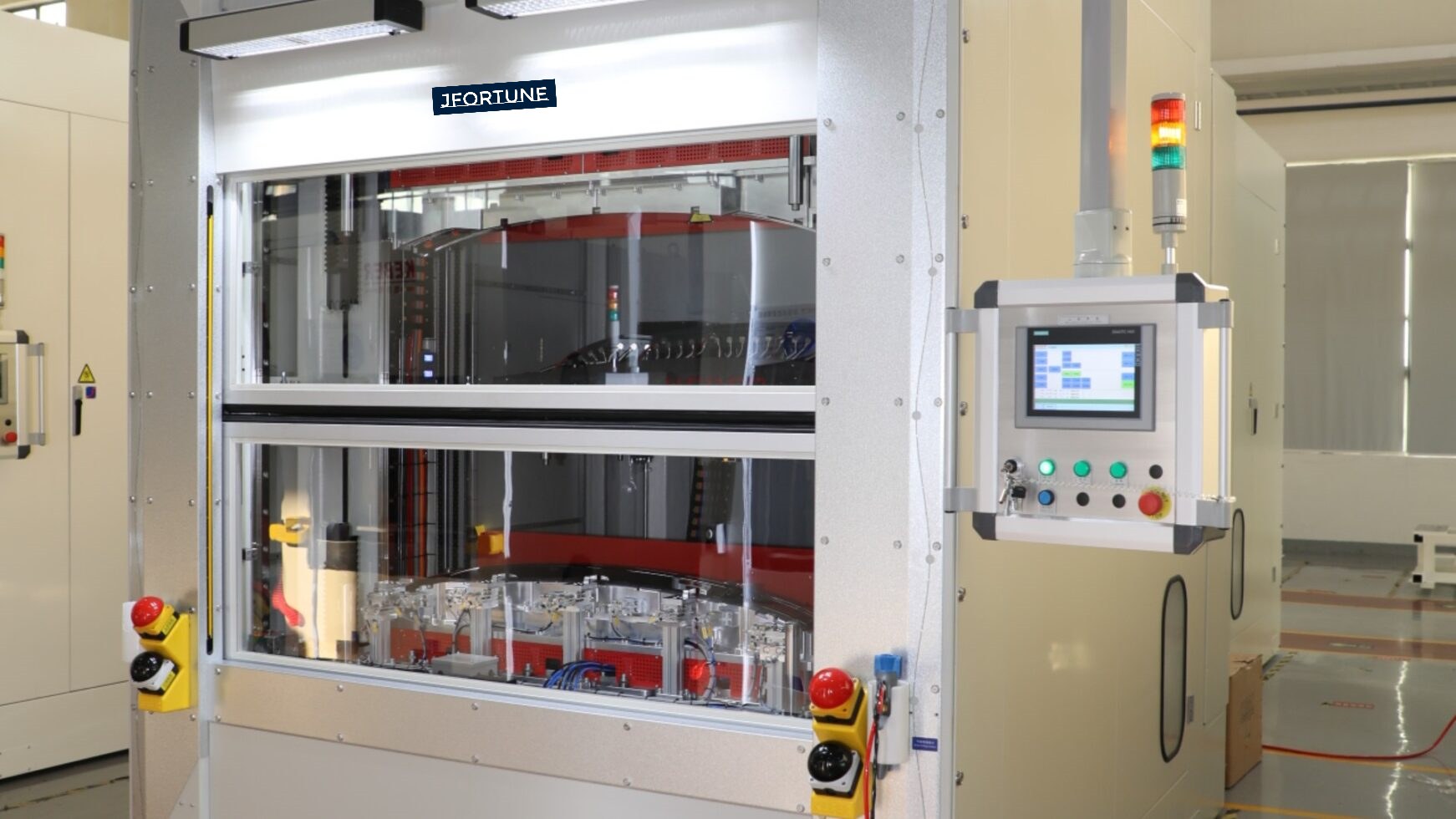
Servo-driven hot plate welder at work
Section 2: How Does Hot Plate Welding Work?
The Basics of the Process
Hot plate welding may seem intricate, but it boils down to a clear, four-step process that blends science and precision. By understanding these phases, you’ll see why it’s a trusted technique for creating flawless plastic bonds.
The Four Phases of Hot Plate Welding
- Matching Phase: The plastic parts are carefully aligned to ensure their surfaces fit perfectly. Misalignment here could weaken the final weld, so precision is key.
- Heating Phase: The parts press against a hot plate, heated to 30-100°C above the plastic’s melting point. This melts the surfaces just enough for bonding.
- Change-over Phase: The hot plate retracts, and the parts are swiftly joined. Speed is critical to keep the melted surfaces from cooling prematurely.
- Welding/Forging Phase: Controlled pressure fuses the parts as the plastic cools, forming a solid, durable bond.
Precision in Practice
Success hinges on mastering temperature, pressure, and timing. Advanced machines, like Suzhou Jfortune’s servo-driven models, monitor these factors in real-time for consistent results. David Guo, founder of Suzhou Jfortune, says, “Our machines are designed to handle even the most complex shapes, giving manufacturers the confidence that every weld meets the highest standards.” Learn more in our guide to plastic welding processes.
Section 3: Advantages of Hot Plate Welding
Why Choose This Method?
Hot plate welding isn’t just another manufacturing tool—it’s a standout solution with benefits that make it indispensable. Here’s what sets it apart.
Strong, Hermetic Seals
The ability to create leak-proof seals is a top perk. In automotive applications, like fluid reservoirs, and medical fields, where sterility is vital, this strength is unmatched. It’s why hot plate welding is a preferred method for safety-critical parts.
Ideal for Large or Complex Parts
Unlike methods limited by size or shape, hot plate welding handles big components and intricate designs with ease. Think car dashboards or multi-part assemblies—it’s perfect for these challenges.
Cost-Effective for Mass Production
For high-volume runs, hot plate welding shines. Once set up, it delivers fast, repeatable welds, cutting labor costs and boosting efficiency. Suzhou Jfortune’s automated systems streamline production lines seamlessly.
Versatility Across Industries
From construction pipes to electronic housings, its compatibility with various thermoplastics makes it a versatile player. It’s a solution that adapts to diverse needs.
Section 4: Materials Suitable for Hot Plate Welding
Understanding Thermoplastics
Hot plate welding pairs beautifully with many thermoplastics, each bringing unique traits to the table. Knowing these materials helps you pick the right setup.
Common Thermoplastics Used
- PVC (Polyvinyl Chloride): Durable and chemical-resistant, ideal for construction and medical uses.
- ABS (Acrylonitrile Butadiene Styrene): Strong and impact-resistant, a favorite in automotive and consumer goods.
- PP (Polypropylene): Lightweight and flexible, perfect for packaging and car parts.
- PE (Polyethylene): Tough and affordable, used in containers and piping.
Why Material Choice Matters
Each thermoplastic’s melting point and behavior under heat affect the process. ABS, for example, needs careful temperature control to avoid warping. Suzhou Jfortune’s welders offer customizable settings for optimal results—check our material selection guide for more.

Common thermoplastics for welding